

Urban trees improve city life by reducing heat and enhancing biodiversity, but they face unique environmental stressors. In this research, you will gain experience in ecological data integrations and statistical analysis in the context of urban ecology. At the same time, you will contribute to a large research effort aiming at developing evidence-based tools for urban management and climate adaptation.
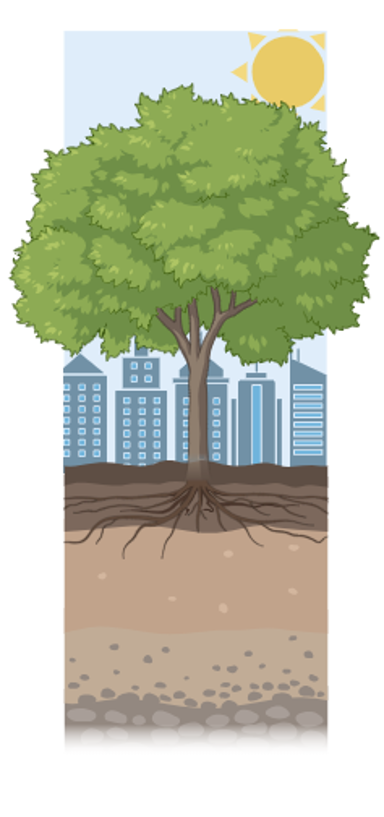
Integrating multi-city datasets to bridge the gap between above-ground tree performance and below-ground soil conditions in urban environments.
Backgroundand context
Trees in the city experience unique, environmental stressors compared to their rural counterparts and cities struggle to assess whether trees are healthy and resilient in the face of such stressors, such as heat and drought. Urban trees are a vital part of city life. Trees improve air quality, provide shade, reduce urban heat, enhance biodiversity, promote rainwater runoff, alleviate high greenhouse gas emissions, and contribute to physical and mental health of nearby residents. Municipalities routinely collect large amounts of information on tree performance, soil conditions, and management interventions, but these data are often fragmented, inconsistent, and difficult to compare across cities. Data availability, measurement methods, monitoring frequency, and recorded variables are likely to differ among cities, creating limitations for direct comparisons.
Objectivesand goals
The aim of this thesis is to identify robust indicators of urban tree health by integrating diverse datasets collected by municipalities and freely available maps. By harmonizing different datasets from multiple cities, you will identify which indicators of tree health should be used at a broader scale, and how these relate to soil and environmental conditions, and management practices.
Materialsand methods
The databases can include tree information in the format of pictures, Excel files, ArcGIS layers, coordinates, qualitative observations, and more. You will explore how tree performance relates to soil properties, environmental conditions, and management practices. Analyses and visualizations will be developed together with the supervision team, leaving plenty of room for your creativity and input.
Studentrequirements
Strong interest or background in data harmonization, statistical modeling, ecological data integration, or GIS/spatial analysis (e.g., working with ArcGIS layers or coordinates).