

ARISE, the infrastructure identifying all multicellular species in the Netherlands, is now open for use. The platform offers a central place to identify and study all multicellular life in the Netherlands.
Developed by Naturalis Biodiversity Center, the University of Amsterdam, the Westerdijk Fungal Biodiversity Institute and the University of Twente, ARISE combines DNA, images, sounds, and AI models to make biodiversity data accessible for everyone. As such, it is one of the biggest and most important projects in the two-hundred-year history of Naturalis.
ARISEin short
Intelligent birdhouses that track what chicks are being fed. Microphones that send messages about the animal sounds they've heard. A DNA database capable of identifying tens of thousands of Dutch species by their genetic material. All of this, and much more, is ARISE (Authoritative and Rapid Identification System for Essential biodiversity information) in action.
The ARISE research infrastructure is built for a broad audience. For example, ARISE works for species specialists looking to verify a potential new discovery, ecologists aiming to map regional biodiversity, and computer scientists developing smarter AI for species recognition. Through the platform, anyone can utilize advanced capabilities for DNA, sensor management, and automated image and sound recognition to identify Dutch species.
Following years of preparation and construction, the research infrastructure has been officially live since November 11, 2025. While we continue to fine-tune behind the scenes, the platform is now fully open for research and use.
Building block for more
For Naturalis, the launch of ARISE was an important milestone. ‘It is the first step in our ambition to map out the entire Dutch nature,’ explains Naturalis’ Scientific Director Prof. Dr. Vincent Merckx. This is urgently needed, as protecting and restoring our biodiversity starts with a precise understanding of where species occur. ‘Our other work, such as measuring DNA traces in soil, water, and air, or a network for automated nature monitoring, builds upon this foundation.’

Moreinformation
More information can be found on the ARISE website. The latest news can be found on our Bluesky and LinkedIn accounts.
Species seeks species: NWO's in-house magazine Resultaat giving a nice update about the state of ARISE in January 2024.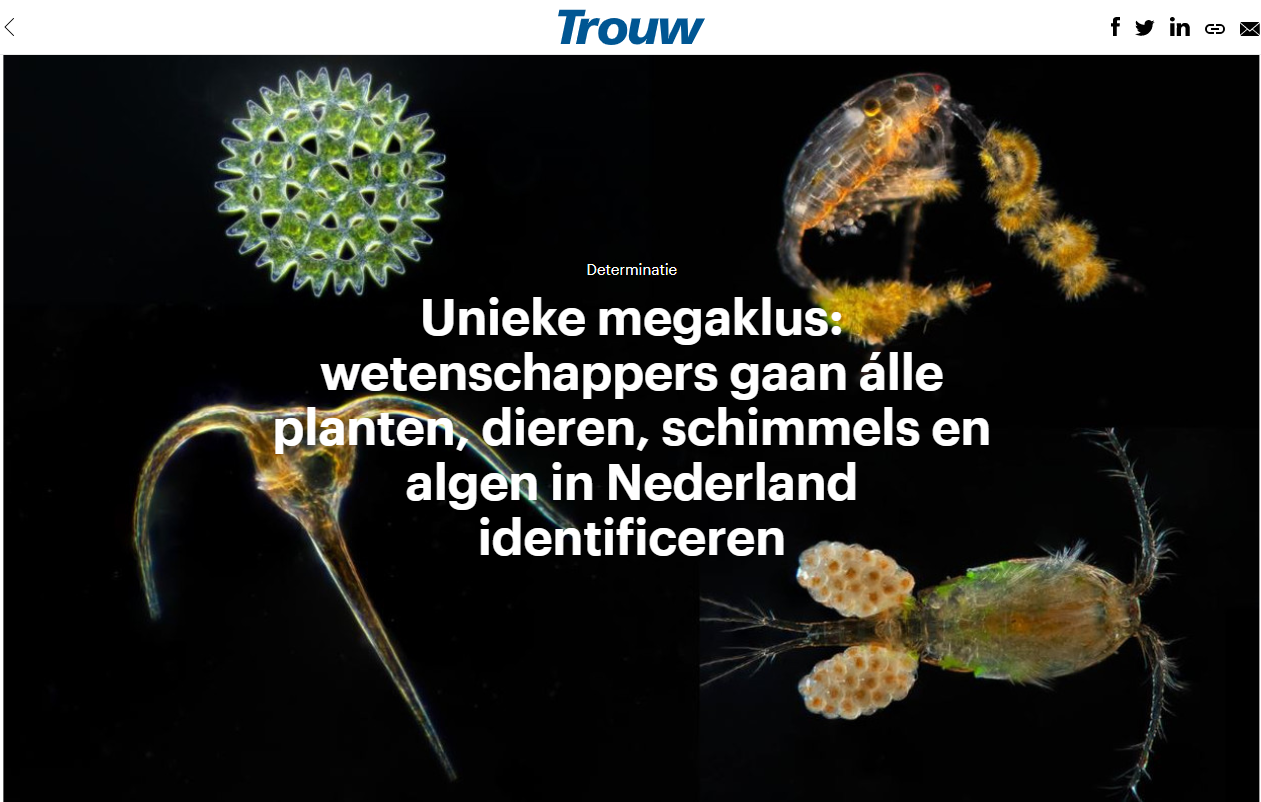
Unieke megaklus - wetenschappers gaan alle planten, dieren, schimmels en algen in Nederland identificeren. Joop Bouma, Trouw, 2020.
'We maken de onzichtbare biodiversiteit zichtbaar'. Irene Faas, New Scientist, 2020.
Deze vogelradar in Artis doet de inzet van vogelaars verbleken. Mark Kruyswijk, Parool, 2021.