

Animal diversity with all the “endless forms most beautiful and most wonderful” fascinated Charles Darwin and bands like Nightwish equally. Understanding how this diversity evolved, the fossil record can elucidate long lost evolutionary steps. Oldest jawed fish remains are from Silurian rocks of China, 439 million years ago. Silurian fish are also found in erratic boulders in the Netherlands.
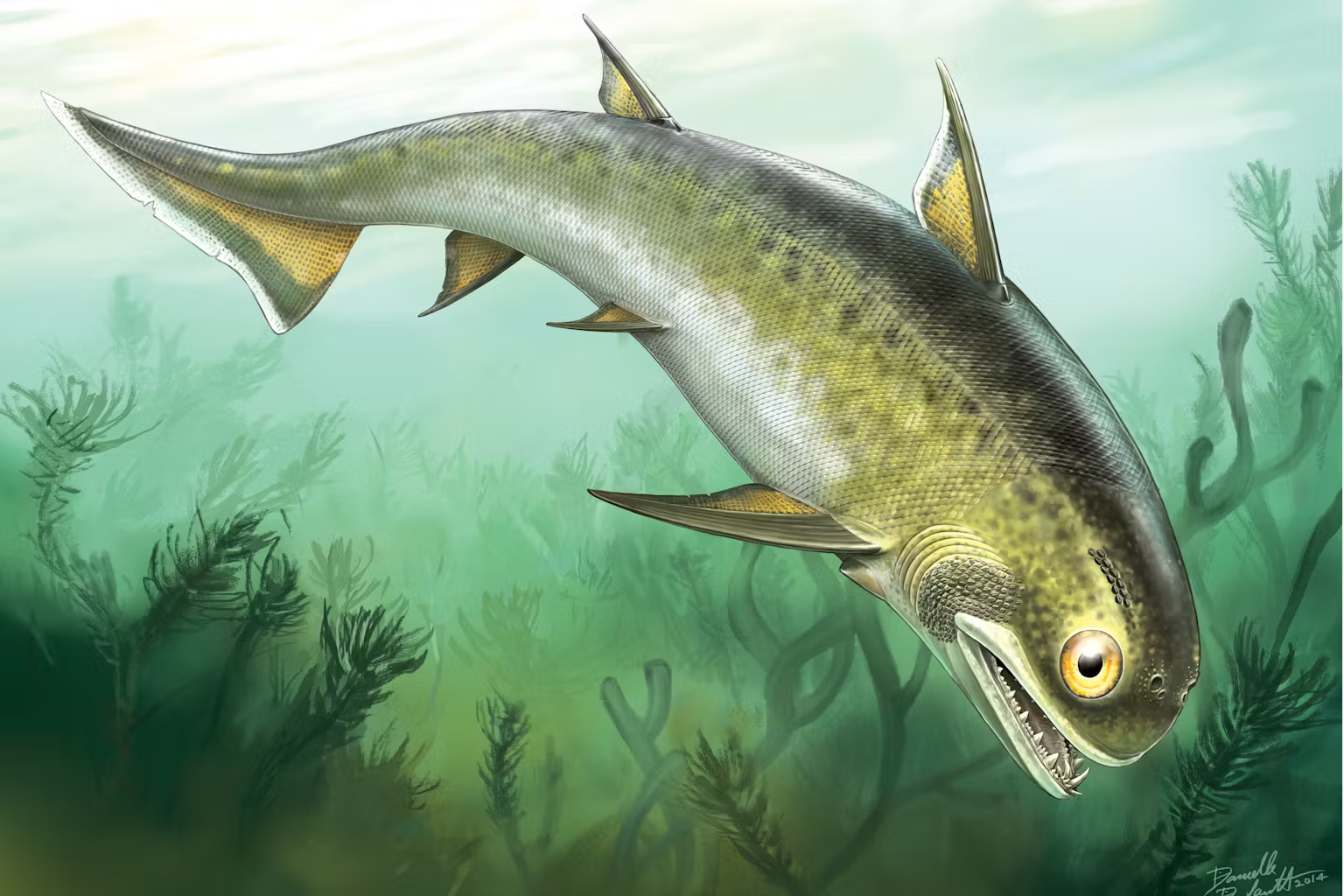
Reconstruction of an Acanthodian (Danielle Dufault , CC BY-SA)
Backgroundand context
During the ice ages glaciers transported rocks from Scandinavia to the Netherlands and deposited them mainly in Friesland. Some of these rocks are from the Silurian and yield remains of fossil fishes called acanthodians, the spiny sharks. These stem-group chondrichthyans inform on the evolution of cartilaginous fishes and the ancestral character stages. A collection of erratic boulders containing fossil fish remains was donated to Naturalis. First projects showed that shedding light into the rocks and visualizing the fossils by scanning them with X-rays using microCT is possible. Visualizing the fossils as 3D models using powerful computers and specialized software, these virtual fossils can be morphologically and taxonomically identified without destruction and preparation of the rock. The new collection of fossils at Naturalis is very large with over 1.700 specimens and the diversity of taxa hidden in these rocks is far from being understood.
Objectivesand goals
This internship project aims to: (1) reconstruct vertebrate fossil remains in 3D using microCT scans, (2) compare the 3D data and virtual models with published taxa, and (3) describe the morphology and identify the taxa.
Materialsand methods
The study will use existing and new X-ray tomographic datasets of Silurian fossils from erratic boulders. Segmentation and volumetric reconstructions of the anatomy from tomogram images will be performed using a 3D software program as AVIZO or Dragonfly, this will lead to a 3D reconstruction of the fossils.
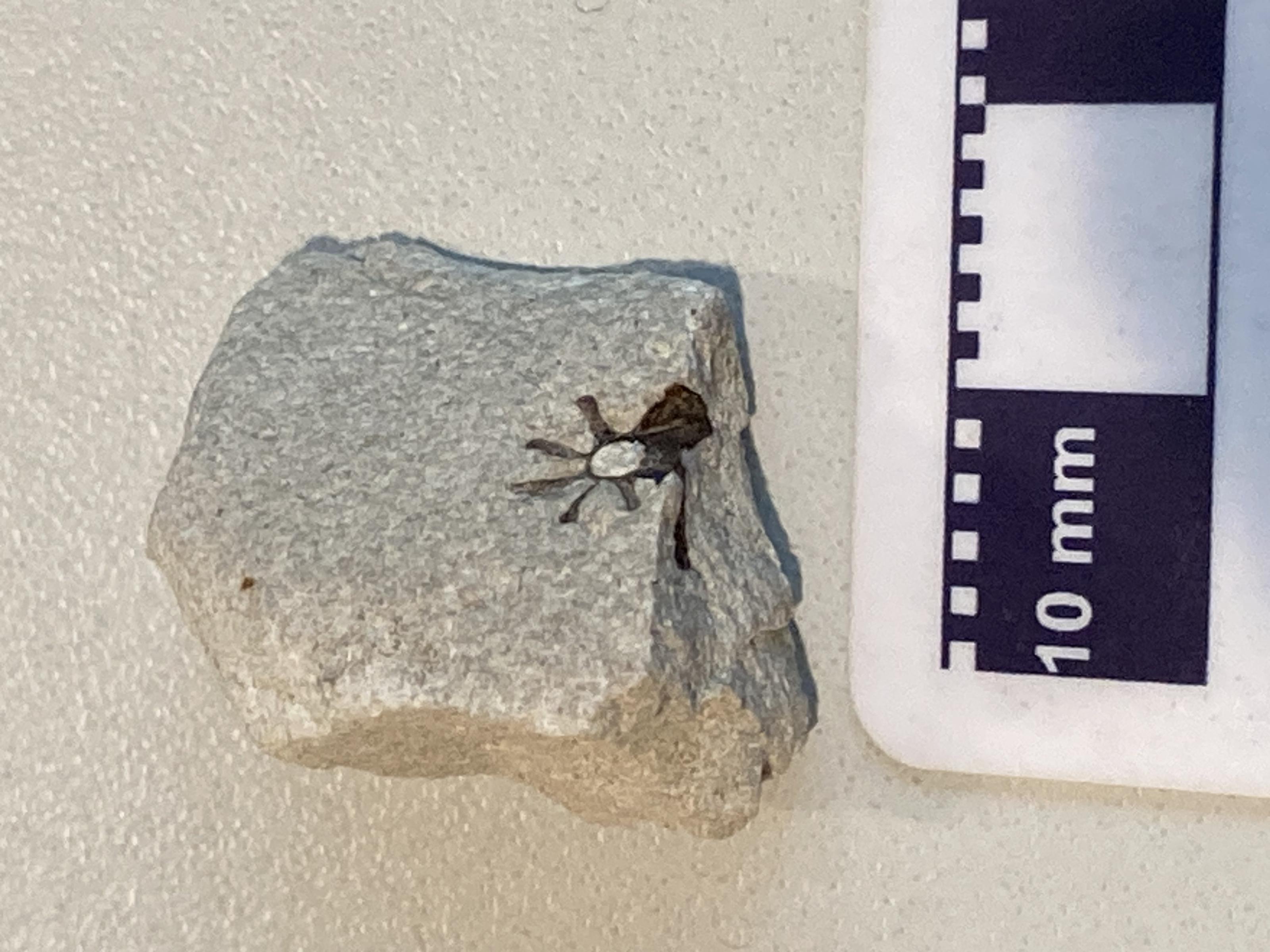
Vertebra in an erratic boulder from the Silurian
Studentrequirements
Basic knowledge in vertebrate anatomy and taxonomy and an interest in computational scientific methods. Creativity, joy in thinking about complex problems in a holistic way.