

Certain seaweeds are known to accumulate heavy metals, making them useful bioindicators of heavy metal pollution. Using material from the Naturalis herbarium, this project examines how heavy metal accumulation in seaweeds has changed over time.
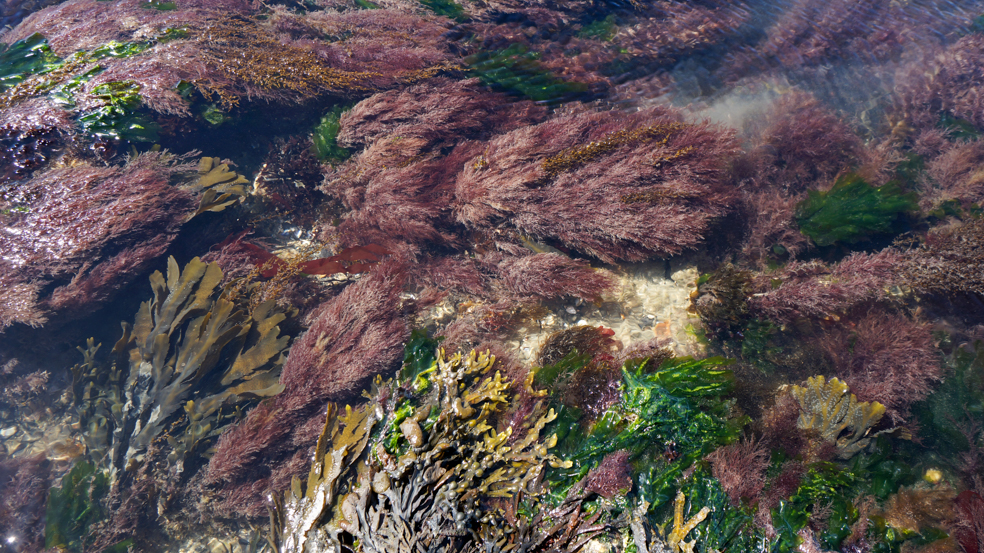
Seaweed community observed during fieldwork.
Backgroundand context
Seaweeds are a diverse group of photosynthetic organisms found in coastal ecosystems worldwide. Certain taxa are known to accumulate heavy metals, making them useful bioindicators of heavy metal pollution. However, there is still limited understanding of how metal accumulation differs among species or changes within species over time. Reconstructing historical trends is challenging, but herbarium collections of press-dried seaweeds offer a valuable resource. The Naturalis herbarium contains tens of thousands of specimens from the Netherlands, providing strong replication across species, locations, and time periods. This project examines how heavy metal accumulation in seaweeds has changed over time.
Objectivesand goals
The main goal of this project is to:
Assess the level of heavy metal accumulation in seaweeds along the Dutch coast and how this has changed over time.
The student will develop the following skills:
- Sample collection during field work
- Handling voucher specimens in a historical collection
- Measuring elemental composition through X-ray fluorescence scanning
- Data analysis using R and QGIS
Materialsand methods
Seaweed specimens can be obtained from two main sources: (1) freshly collected samples from the Dutch coast, and (2) historical material housed in the Naturalis herbarium collection. However, not all herbarium vouchers in the collection have been fully processed, so an important part of the study is to sort and curate the collection to determine which specimens are suitable for analysis.
In addition, the study allows for a methodological comparison between different preservation types: freshly collected material, specimens dried as herbarium vouchers, and samples that were preserved in formalin prior to drying. Elemental composition will be measured using X-ray fluorescence (XRF) scanning and validated against reference samples.
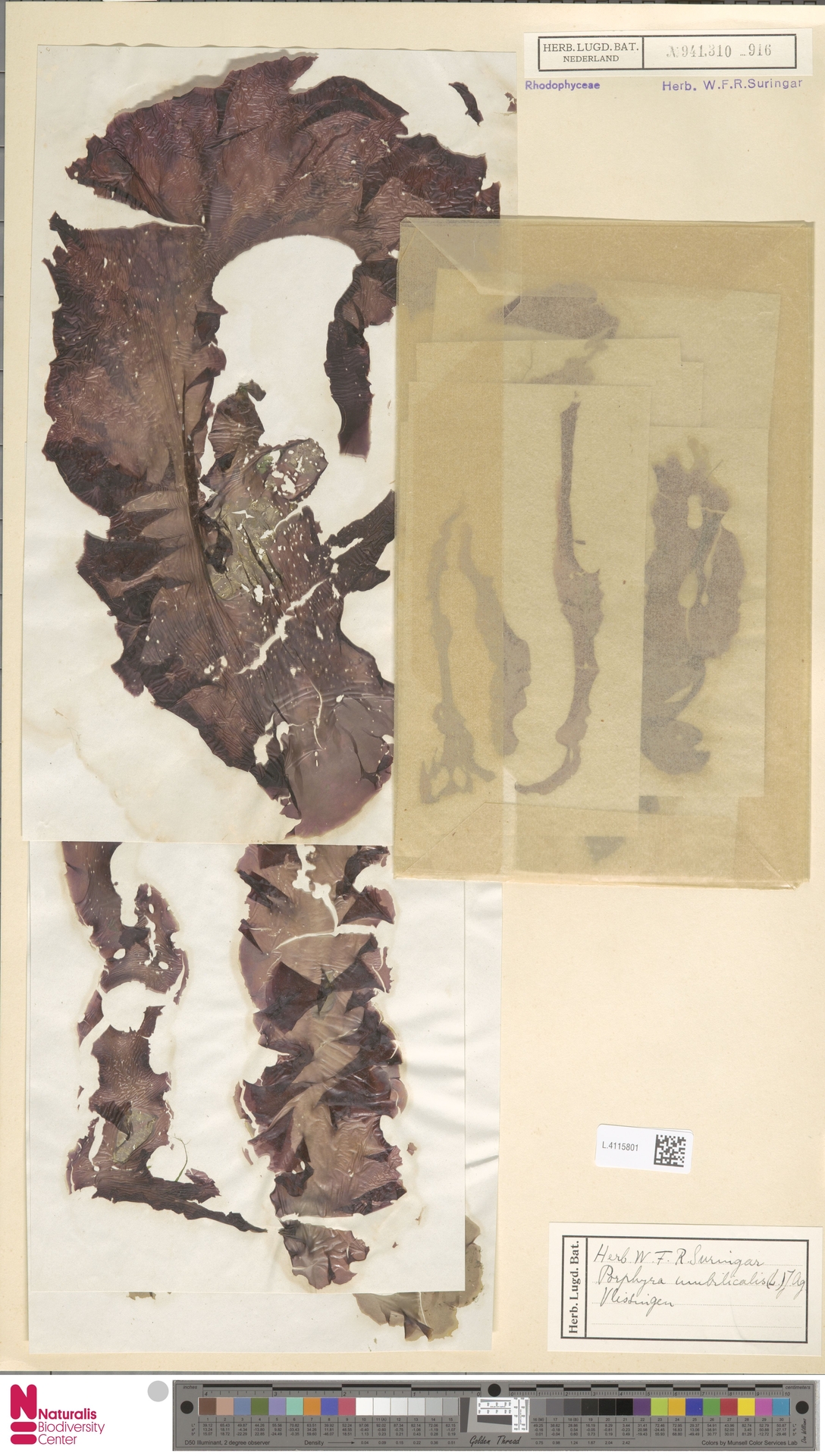
Example of an herbarium specimen that can be used to measure heavy metal accumulation.
Studentrequirements
Enthusiastic about biodiversity of seaweeds and historical collections. Experience with data analysis in R is preferred, but not essential.