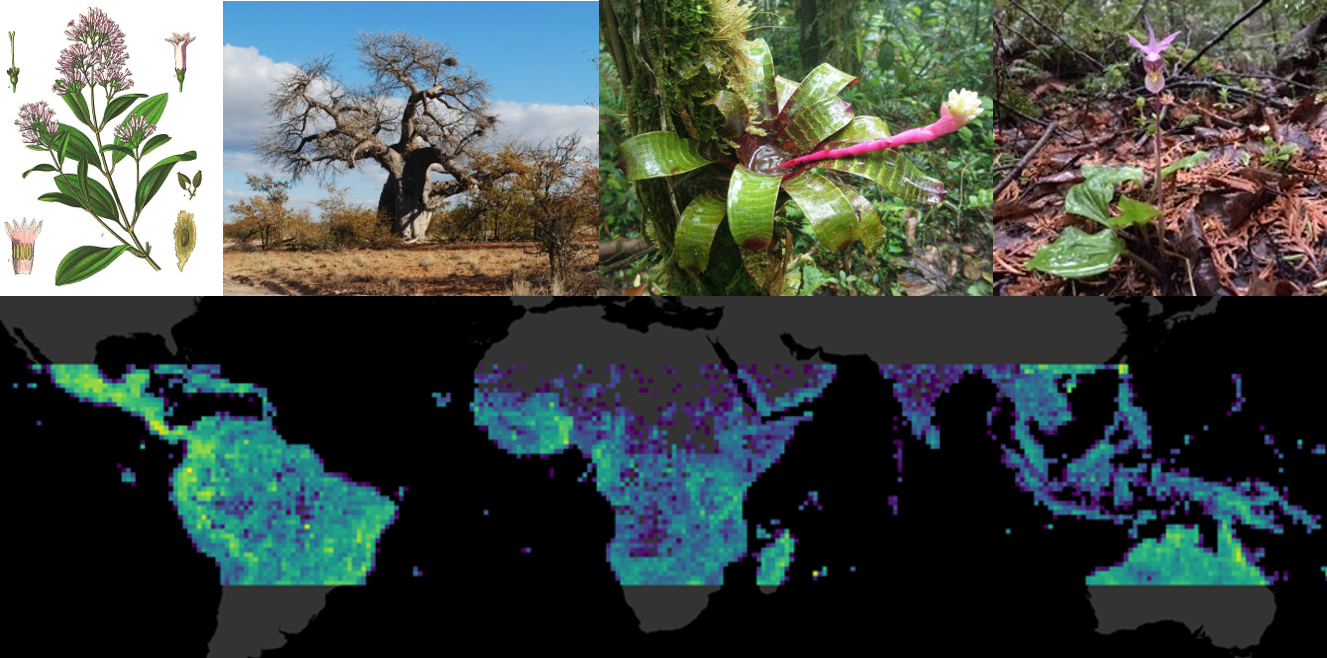

Species distribution data digitized from museum specimens and made available via public databases are a crucial resource in biodiversity research, including studies in ecology, biogeography, systematics and conservation biology. A central challenge to the use of these data in research is problematic geographic coordinates, which are either erroneous or unfit for downstream analyses (for instance because they are overly imprecise). In this talk, I will highlight major concerns and present computational tools to address them. Using theses tool, I will then give examples on how to use large-scale species occurrence data from museum collection in biogeography and conservation, including the evolution of the extraordinary diversity of the American tropics and machine learning algorithms to speed up conservation assessments.
Alexander Zizka works for the German Centre for Integrative Biodiversity Research (iDiv)
Time: 16:00 | Place: https://meet.google.com/yji-saxf-phk